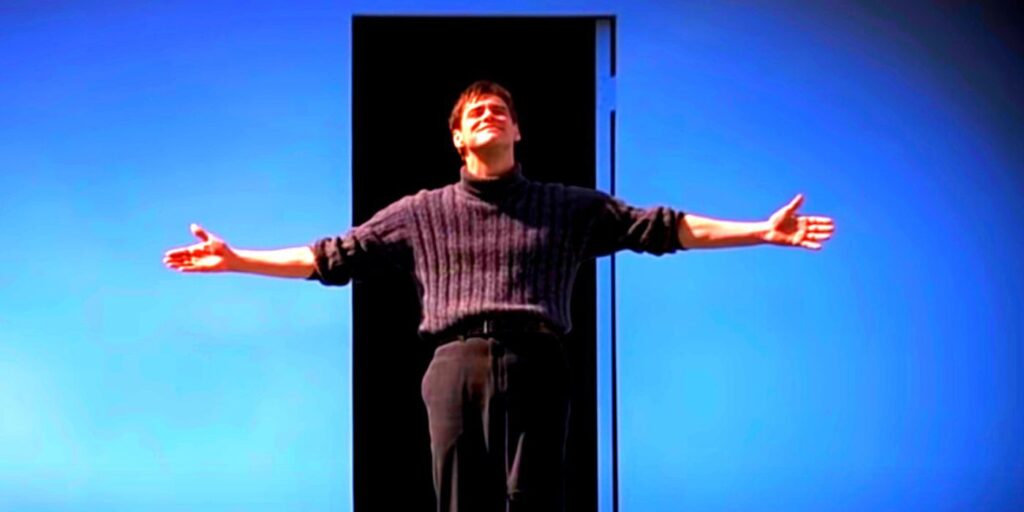
Table of Contents
The Truman Show explained beyond ratings reveals a film about freedom, comfort, and the quiet power of control.
When people talk about movies, ratings usually come first. A number out of ten, a star count, or a short verdict: good, great, overrated. Ratings help us decide what to watch—but they rarely explain why a film stays with us long after it ends.
The Truman Show is one of those films that quietly resists being reduced to a score. It’s often described as a comedy-drama with a clever premise. That description is accurate, but incomplete. The film’s real power doesn’t lie in its plot twists or genre blend. It lies in the questions it asks—and the uncomfortable reflections it holds up to modern life.
This is a review that looks beyond ratings. Not to retell the story, but to explore what the film is actually saying beneath its calm surface.
A minimal, spoiler-safe setup
At its simplest, The Truman Show follows an ordinary man living an ordinary life in a seemingly perfect town. Everything appears stable, friendly, and predictable. Over time, subtle inconsistencies begin to surface, leading the audience to realize that this normalcy is carefully constructed.
That’s all the context needed.
The film is not driven by dramatic events as much as by awareness. What matters is not what happens, but what it means to slowly realize that one’s reality may not be entirely self-chosen.
The central question the film asks
At its core, The Truman Show asks a deceptively simple question:
Is a comfortable life still meaningful if it isn’t freely chosen?
The film is not really about whether a world is fake or real. It’s about agency. About the difference between safety and freedom. About whether protection can quietly turn into control.
Rather than shouting this question, the film lets it unfold gently. And that restraint is precisely what gives the question its weight.
Comfort versus freedom : The Truman Show Explained

One of the film’s strongest themes is the tension between comfort and freedom.
The world presented is safe. Predictable. Designed to minimize risk. Nothing truly terrible is allowed to happen. On the surface, it looks like an ideal life—one many people might accept without complaint.
But comfort comes with conditions. Choices are subtly narrowed. Paths are guided. Fear is carefully introduced where needed. Over time, security becomes a boundary rather than a support.
The film suggests something deeply human: comfort is seductive. We often accept limitations not because they are forced upon us, but because they are wrapped in reassurance. Freedom, on the other hand, is uncertain. It demands responsibility, risk, and the possibility of failure.
This is not just a cinematic idea. It mirrors real life—stable routines, predictable careers, carefully curated lifestyles. The film never says comfort is wrong. It simply asks what we might trade away for it without noticing.
Surveillance without force
Another striking aspect of the film is how control operates.

There is no visible violence. No constant threats. No overt oppression. Control is exercised politely, almost lovingly, under the justification of care and entertainment.
This reveals an unsettling truth: the most effective surveillance doesn’t feel like surveillance at all. It feels normal. It feels helpful. It fades into the background.
The film shows how observation becomes invisible when it is normalized. When being watched is reframed as protection, guidance, or harmless entertainment, resistance rarely emerges.
What makes this theme powerful is its subtlety. The film doesn’t accuse. It observes. And in doing so, it highlights how easily oversight can be accepted when it’s presented as benevolent.
Manufactured reality and the problem of consent
A quieter but deeper theme runs beneath the film’s surface: the idea of manufactured reality.
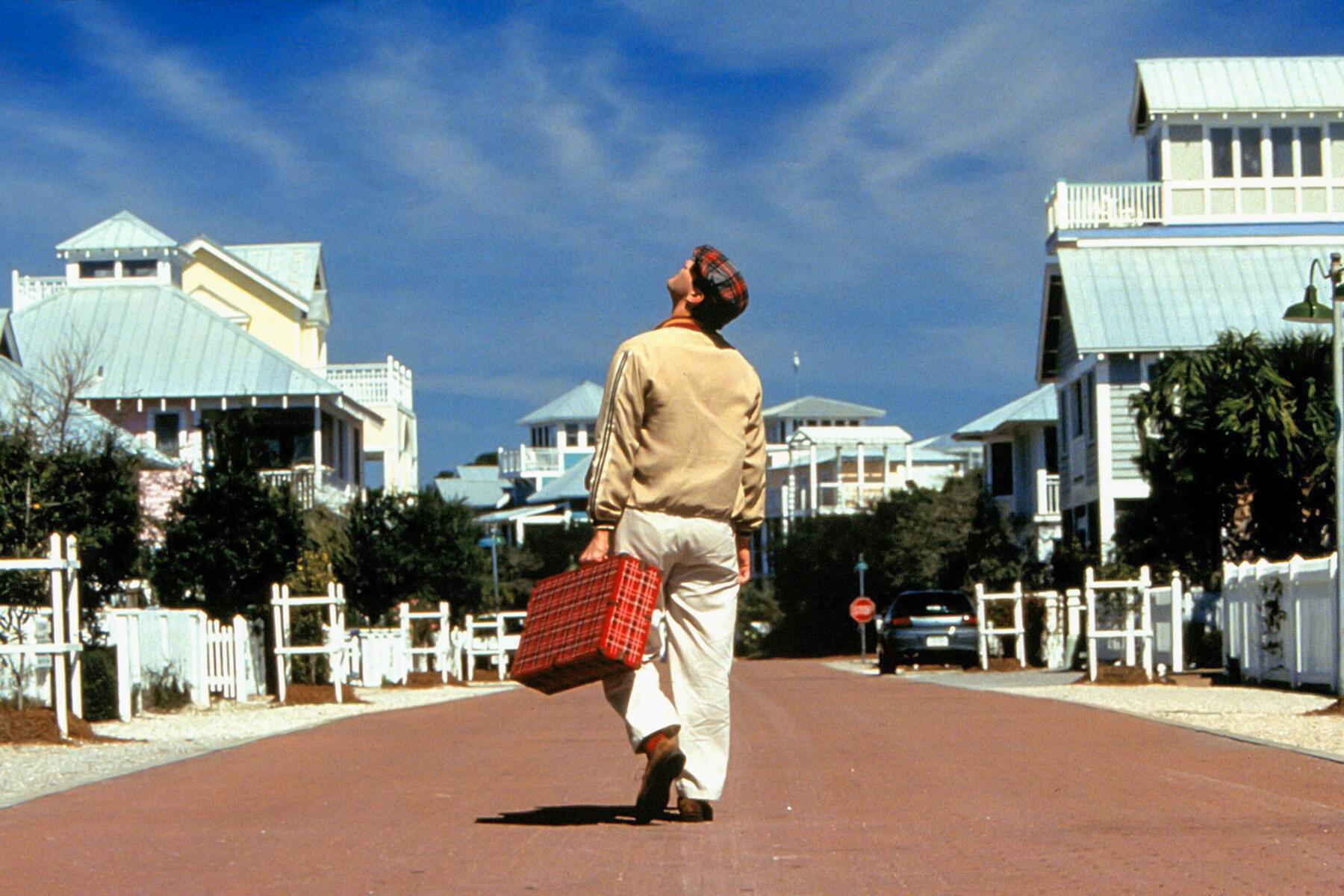
The life on display appears authentic. Emotions are real. Relationships feel real. But the structure around them is engineered. Information is selectively presented. Alternatives are quietly removed.
This raises an uncomfortable question about consent. Can someone truly consent to a situation if they are never given the full picture?
The film suggests that manipulation does not always rely on lies. Sometimes, it relies on omission. When key truths are withheld, choices remain technically free—but practically constrained.
This theme resonates far beyond the film. It speaks to how environments shape behavior, how options can be guided without explicit force, and how freedom can exist in form but not in substance.
The audience as part of the system
One of the film’s most unsettling achievements is how it implicates the viewer.
Within the story, an audience watches a life unfold for entertainment. Outside the story, we do the same. The parallel is deliberate—and uncomfortable.
At what point does observation become exploitation? When does curiosity turn into entitlement? The film never answers these questions directly. Instead, it lets the discomfort linger.
Importantly, this is not an accusation. It’s an invitation to reflect. The film recognizes a universal human tendency: to watch, to consume stories, to detach from the consequences as long as they remain distant.
By holding up this mirror, the film expands its scope. It’s no longer just about one individual—it’s about how societies normalize intrusion when it is entertaining or profitable.
How the film communicates its ideas
Much of the film’s impact comes from how it tells its story rather than what it shows.
The performances are deliberately restrained. Innocence is played without exaggeration. Unease grows gradually, not through dramatic breakdowns but through subtle shifts in behavior.
Visually, the world feels orderly and composed—almost too perfect. This artificial neatness becomes a language of its own, hinting that something is being maintained rather than lived.
The tone balances lightness with weight. Humor exists, but it never erases the underlying tension. Music and pacing guide emotional realization rather than shock, allowing the viewer to arrive at conclusions instead of being pushed toward them.
All of this reinforces the film’s central idea: awareness is a process, not a moment.
What the film is really saying

Stripped of plot and spectacle, The Truman Show communicates a few enduring ideas:
- A life without meaningful choice is a performance, not a life
- Control is most effective when it presents itself as care
- Truth is often uncomfortable, but necessary for growth
- Entertainment can normalize intrusion
- Freedom begins not with escape, but with awareness
These are not presented as slogans. They emerge naturally from the world the film builds.
Who this film resonates with most
This film tends to resonate deeply with viewers who enjoy reflective, idea-driven cinema. It speaks to those who are thinking about routine, agency, and the systems that quietly shape everyday life.
It may not appeal as strongly to viewers seeking fast-paced storytelling or constant plot movement. The film asks for attention and patience—and rewards it with depth.
A spoiler-safe conclusion
The Truman Show remains relevant because the questions it asks have not aged. If anything, they have become more pressing.
The film doesn’t tell viewers what choices to make. It simply encourages them to notice the structures around them—and to ask whether comfort has quietly replaced freedom.
Its power lies not in shock or spectacle, but in what lingers after the screen goes dark. Long after the rating is forgotten, the question remains:
How much of our reality have we truly chosen—and how much have we simply accepted?
Explore more thoughtful film reviews and cultural reflections on the WiderDepths blog.
Well well well!
As usual , Selection of topic! Best!
Have read many reviews based on ratings/cast/music etc etc.
Few people explain it to the core. Nicely articulated.
Thanks 😁