/Explore more into our current-technologies

AI Is Not Replacing Jobs — It Is Replacing Tasks: Here’s the Difference
Scroll through the news or social media for a few minutes and you’ll likely see a familiar claim: AI is replacing jobs.
It sounds dramatic. It feels threatening. And for many people, it triggers a quiet anxiety about the future of work.
But that sentence—while attention-grabbing—is not quite accurate.
What’s actually happening is more subtle, more gradual, and far more manageable: AI is replacing tasks, not entire jobs. Understanding this difference changes how we think about careers, learning, and the future itself.
This article isn’t about hype or fear. It’s about clarity.
Table of Contents
Jobs and tasks are not the same thing
We often speak about our work as if it’s a single, solid thing: my job. But in reality, a job is not one action—it’s a collection of tasks, carried out in a specific context, with responsibility attached.
A job is a role.
A task is an action.
Think about a teacher. Teaching isn’t one activity. It includes:
- Planning lessons
- Explaining concepts
- Managing a classroom
- Grading assignments
- Mentoring students
- Communicating with parents
Each of these is a task. Together, they form the job.
The same is true for almost every profession. An accountant doesn’t just “do accounting.” A software developer doesn’t just “write code.” A customer support agent doesn’t just “answer questions.”
When we say “AI is replacing jobs,” we blur this distinction—and that’s where confusion begins.
Why the confusion feels so real
If jobs are clearly bundles of tasks, why does it feel like entire roles are under threat?
One reason is visibility. AI often performs tasks that are easy to notice: writing text, generating images, answering questions, summarizing documents. When a tool produces something that looks finished, it can feel like it’s doing the whole job.
Another reason is how stories are told. “AI replaces tasks across multiple roles” doesn’t make a compelling headline. “AI replaces writers” does.
There’s also a psychological element. We identify emotionally with our job titles. So when a task inside our role is automated, it can feel personal—even if most of our responsibilities remain untouched.
But to really understand what’s happening, we need to look inside jobs more carefully.
Every job is a bundle of four kinds of tasks
Across industries and professions, most work can be grouped into four broad types of tasks. This simple framework helps explain where AI fits—and where it doesn’t.
1. Routine tasks
These are predictable, repetitive, and rule-based. They follow clear steps and don’t change much from one situation to the next.
Examples:
- Data entry
- Scheduling
- Formatting documents
- Basic calculations
These tasks are the easiest to automate, and technology has been doing this for decades—long before modern AI.
2. Information tasks
These involve handling large amounts of information: summarizing, searching, drafting, translating, or reorganizing content.
Examples:
- Writing a first draft of an email
- Summarizing meeting notes
- Searching documentation
- Creating standard reports
This is where modern tools are particularly strong. They don’t understand in a human sense, but they are very good at processing patterns in information.
3. Judgment tasks
These involve decisions, trade-offs, and responsibility. They require context, experience, and an understanding of consequences.
Examples:
- Making a diagnosis
- Approving a loan
- Choosing a strategy
- Evaluating risk
AI can assist here by providing suggestions or insights, but accountability remains human.
4. Human tasks
These rely on trust, empathy, persuasion, and social understanding.
Examples:
- Leading a team
- Negotiating
- Handling sensitive conversations
- Teaching, mentoring, motivating
These tasks are deeply tied to human relationships and are the hardest to automate meaningfully.
Most jobs include all four—just in different proportions.
What AI is actually doing in workplaces today

In practice, AI is rarely taking over entire roles. Instead, it’s being introduced at specific points in workflows.
A customer support agent might use it to draft an initial response—but still decides how to handle complex or emotional cases.
An analyst might use AI to summarize raw data—but still interprets what it means and explains it to stakeholders.
A student might use AI to condense notes—but still has to understand the material to solve problems or apply concepts.
In these cases, AI acts as a first pass, not a final authority. It removes friction, speeds up routine and information tasks, and frees time for work that requires judgment and human connection.
This shift often feels small at first. But over time, it changes how roles are shaped.
When task replacement can affect jobs
Being clear doesn’t mean pretending there’s no impact.
If a role is heavily dominated by routine tasks, automation can reduce the need for as many people doing that exact work. Productivity increases can mean that fewer workers are required to achieve the same output.
But even here, the story isn’t simply “jobs disappear.”
What often happens instead is role redesign:
- New responsibilities appear
- Oversight and quality control become more important
- Hybrid roles emerge that combine technical tools with human judgment
Some job titles fade, others evolve, and new ones appear. This has happened repeatedly throughout history—from agriculture to manufacturing to office work.
The important point is that AI doesn’t replace people wholesale. It reshapes how value is created.
The real deciding factor isn’t AI—it’s decisions
Two organizations can use the same AI tool and get very different outcomes.
One might use it to reduce burnout, improve service quality, and allow employees to focus on meaningful work.
Another might use it purely to cut costs.
The technology is the same. The results are not.
The same is true at the individual level. One person integrates AI thoughtfully, using it to handle low-value tasks and deepen their expertise elsewhere. Another avoids it entirely—or relies on it without understanding—and falls behind.
AI doesn’t decide who benefits. People do.
A practical way to think about your own work
Instead of asking, “Will AI replace my job?” try a more useful question:
“Which tasks in my job can be assisted, and which should I strengthen?”
Here’s a simple exercise:
- Write down the tasks you actually do in a typical week—not your job description.
- Label each task as routine, information, judgment, or human.
- Identify two tasks that AI could reasonably assist with today.
- Use the time saved to improve tasks that involve judgment or human interaction.
- Track outcomes, not tools. What improved because of your choices?
This mindset shifts focus from fear to agency. It treats AI as a tool—not a verdict.
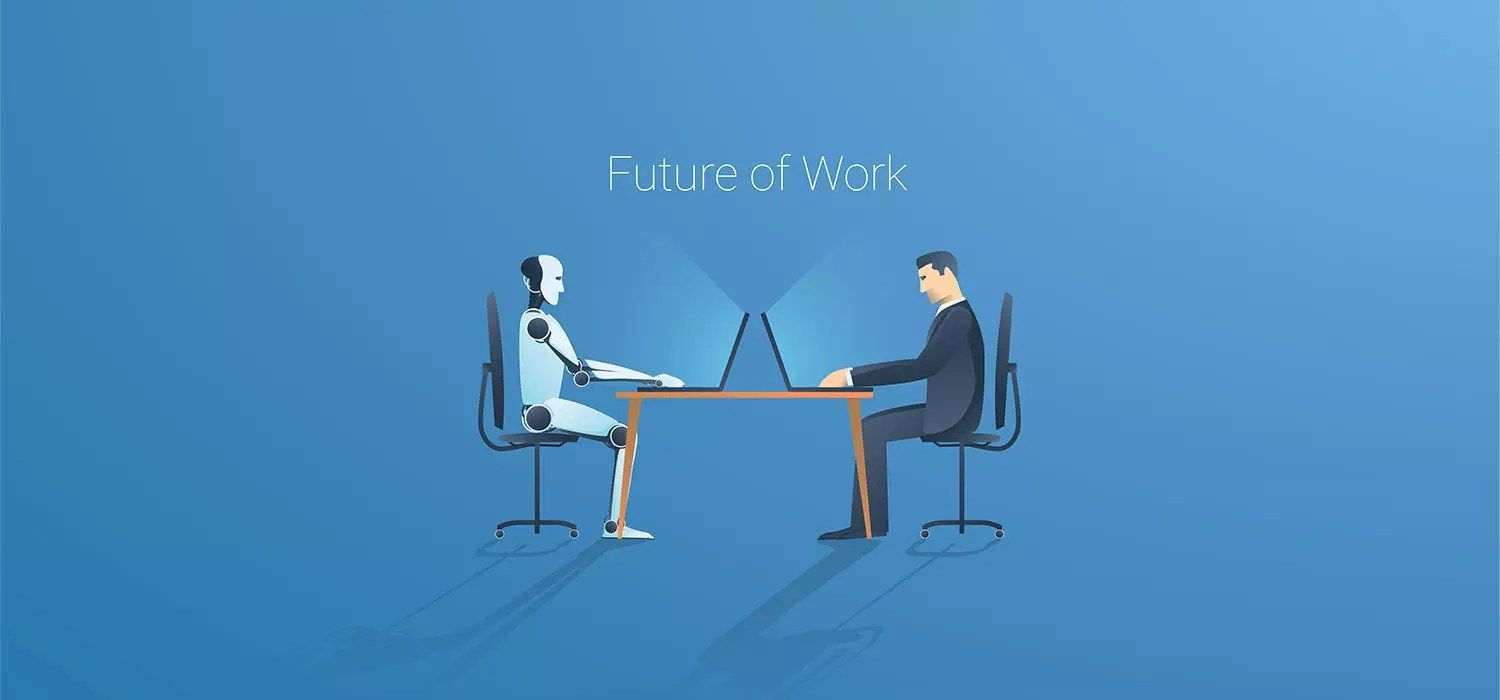
A calmer way to see the future of work
AI is not arriving as a sudden replacement for human effort. It’s entering workplaces gradually, unevenly, and imperfectly—mostly by changing how tasks are done.
Most people won’t wake up to find their job gone. But many will find their work rearranged.
Those who understand the difference between jobs and tasks can adapt without panic. They know which parts of their work can be handed off—and which parts matter more than ever.
So instead of asking whether AI will take your job, ask a better question:
Which tasks can I let go of—and which ones should I own more deeply?
That’s where the future of work is really being decided.